


This newsletter sits at the crossroads of hospitality and technology. You’re receiving it because you’re interested in one, the other, or both. Know someone else who might be? Please share it.
I made my first restaurant reservation with Muse, Meta’s new and much-hyped personal AI agent. It asked what I felt like eating, found a place in the neighbourhood, and made the reservation by itself. It felt like living in the future, except the future is still pretty slow. The bot took six or seven minutes where I could probably have done it in under three.
I tried the same thing with a hotel booking and the good news for hospitality; in both cases, the agent booked direct. It even signed me up for Ace’s loyalty program to get the member rate.
For hoteliers, this is a real chance to rely less on OTAs. Make your website easy for personal agents to understand and book through.
You either die a hero, or you live long enough to add an AI chat to your app...
Yesterday, Accor announced the launch of its AI concierge in its app and on its website. At the Skift Forum, Brian Chesky said Airbnb will launch a travel agent soon, and Ben Leventhal teased on instagram a new AI concierge in the Blackbird app.
For all three, it makes sense to use the enormous amount of data and expertise they’ve built up to personalize the experience. But another AI concierge still feels like old-world thinking. When was the last time you opened any of those apps? Probably not today. Muse or Grok, on the other hand? You might use them several times a day.
I’m less interested in using a separate AI concierge for every service. I want the one I already use to talk directly to theirs. Don’t build another chatbot. Build the layer that lets agents do business with your business.
If I win the lottery, I won’t say anything, but there will be signs...
One of them might be a private train car. I’ve never seen one fall out of the sky, which is reason enough to choose it over a private jet.
Remember that tweet from DoorDash’s CEO saying the rumours about a “desperate algorithm” were false? Because asking his data science team to rank how desperate a delivery driver was, so the company could lowball rate them, would be morally wrong.
The New York Times published a long interview with formers DraftKings data scientists who claimed the gambling and sports betting company had asked them to identify users most vulnerable to addiction, then retarget them with more specific ads to make sure they wouldn’t leave the app.
I’m not saying that because DraftKings allegedly did something sketchy, DoorDash is allegedly doing the same thing. I’m just saying data science can get awfully creative when you have access to that much behavioural data and your goal is to maximize profit at all cost.
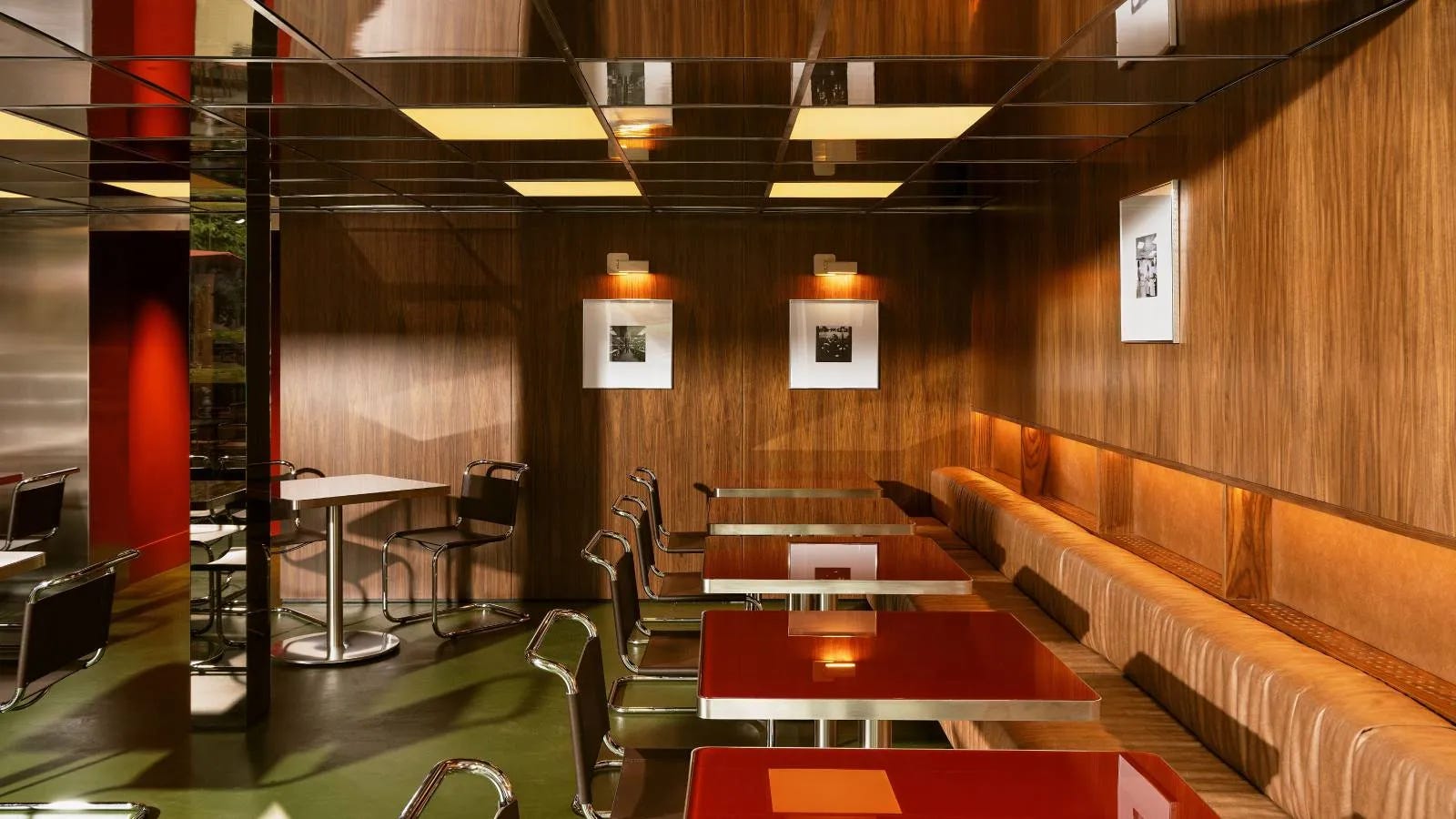
Space Age design is having a moment again. Expect to see more wood panelling, tubular chrome, and colourful lacquered furniture. Just like this one:
I think the OTA's are actually the ones in trouble.....
Booked direct and signed you up for the loyalty scheme unprompted, that's the bit to watch. In a write-up I did of my fortnight with one of these agents, the cautionary tale was an agent asked to find open dinner reservations that booked a table with a $200 cancellation fee.
Job done before anyone agreed the price. Six minutes versus your three is fine while it's learning. The expensive version is when it's fast and wrong. Genuine question: did Muse show you the cancellation terms before it confirmed, or did you meet them in the confirmation email?