
Google Map, we're so back!
It took them 10 years, but now more than ever, Google is back in the Super Travel App game.


For a few years now, I’ve been tracking which company will win the super travel app race, the one app that becomes your true end-to-end travel companion, from inspiration to booking to navigation to dinner recommendation. My shortlist always had three serious contenders.
Airbnb: the hungry underdog. Brian Chesky’s vision to build it is real, that’s why he’s invested so heavily in experiences. But a lack of focus, and he somehow lost his “founder mojo”, makes Airbnb the least likely to win. The profile and unique identity concept was genuinely interesting; it was just never fully developed. And at the end of the day, Airbnb doesn’t control the experience. It remains a marketplace, not a companion. Though who am I to short a self-made billionaire?
Uber: the smart kid. My money was always on Uber, first because Dara Khosrowshahi is a hell of a CEO, and second because the company made strategic bets that paid off. It controls your movement, knows your food preferences, serves you on both business and leisure trips, and has embedded itself in daily life in a way Airbnb never has. Slowly but surely, Uber has been creeping toward super-app status.
Google: the rich kid. I’ve always loved the idea of Google becoming the super travel app we all dream of, but the love was never reciprocal. Google has everything: hotel, restaurant, and flight data with complete booking integration. Reviews, user preferences, identity. Live pricing and payments. Trip planning and sharing via Docs and Map pins. Gmail for communication. And now Gemini baked into the core. Still, Google executives have repeatedly said they have no interest in pushing the travel vertical harder. And it showed, most of their travel tools sat untouched for years.
What changed?
Two major innovations might finally change that calculus.
The first is Waymo. It’s one of the coolest physical AI products to date, it solves the real pain of urban transportation, and it’s a direct challenge to Uber’s core business. If Waymo scales beyond its current footprint, we could genuinely be moving toward a world where people don’t need to learn to drive, and don’t need to own a car. Waymo could do to the car what the iPhone did to the watch: you don’t wear a watch to know the time anymore, but to signal status. Car ownership could become optional for the same reason.
The second came with the recent release of the new Google Maps. As the announcement put it, Google is “transforming exploration into a simple conversation”, its biggest navigation upgrade in over a decade.
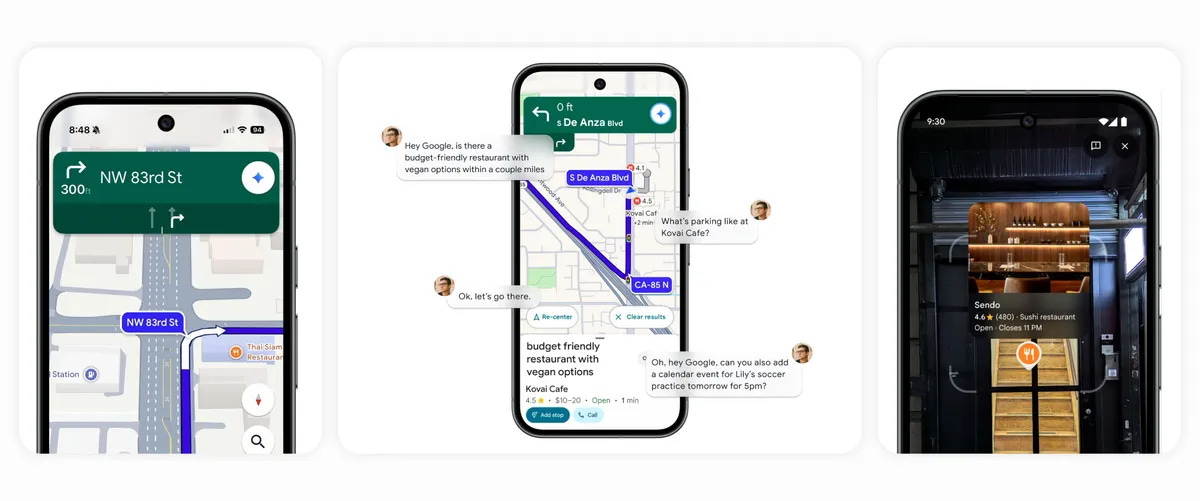
Apps like Mapster, Beli, and more recently Rodeo have been trying to build map-driven discovery tools, but none of them ever stuck with me for a simple reason: the data couldn’t talk back. Maps are great for navigation, but a terrible medium for making decisions between multiple options as you can only sort by distance.
I felt this pain personally. While living in New York, I received tickets to an off-Broadway show as a gift. Afterward, I wanted dinner, but the show was in a neighborhood I didn’t know well, not famous for its restaurant scene. So I bounced back and forth between food guides and Google Maps for 10 minutes, trying to cross-reference ratings, locations, and vibes. I gave up and ended up at the same pizza place I always go to.
With the new conversational layer, Gemini finds the best option based on what it already knows about you and make the struggle disappears. Side note: I’d been building a side project doing exactly this. I’ll go to my grave believing Google’s team saw my API calls, my prompts and thought it was worth stealing... One can dream.
What Google still needs to build
The new Maps is a real move but to become a genuine super travel app, Google needs two more pieces.
The first is financial data. Apple tried it with Apple Card. A Google Pay product with real spending intelligence would let Google understand not just where you go, but how you spend when you get there. That layer of behavioral data, what you actually buy, at what price points, in which categories, would make its recommendations sharper than anything a review algorithm can produce.
The second is daily commerce. Uber cracked this with Uber Eats, by owning grocery and food delivery, it stays relevant between trips. Google needs something equivalent. A foothold in day-to-day delivery would close the loop, turning Google in an even more life companion, which is the real prize.
The bottom line
Right now, if Polymarket had a market on which company gets crowned the first true super travel app, my money shifts to Google. The new Maps is a signal that Google is finally taking travel seriously. That said, tech moves fast, and Uber has surprised us before, so maybe it’s working on something bigger.
One thing remains certain: I’m still not putting my money on Brian.